
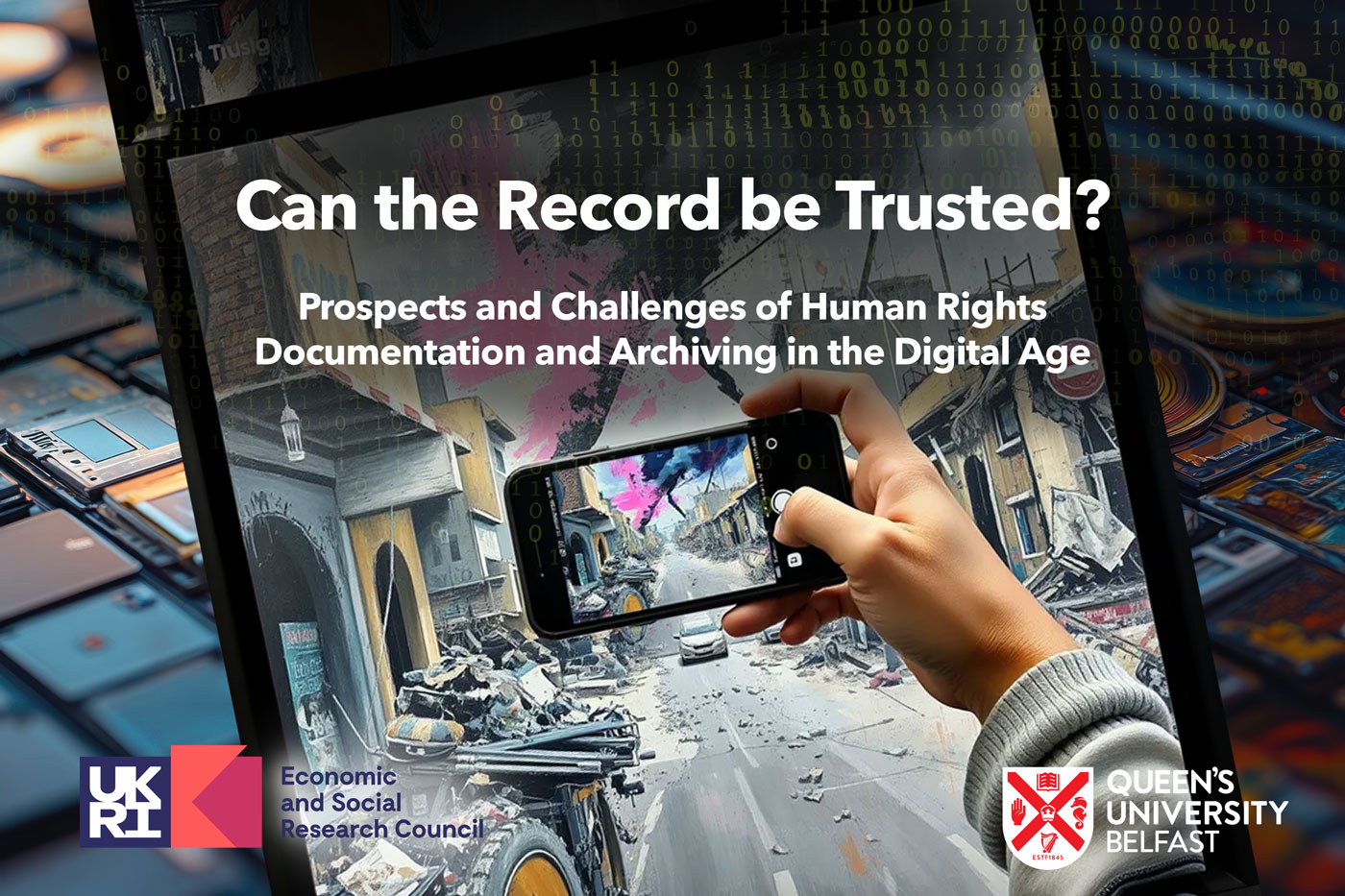
The evidence exists. Millions of hours of footage document atrocities in Syria, Gaza, Ukraine, and beyond. The question is no longer whether we’re recording human rights violations—it’s whether we can authenticate, preserve, extract from, and use these records for future justice efforts.
Digital technology has transformed conflict documentation. Citizens and civil society organizations have become frontline documenters, using smartphones, drones, and open-source tools to create evidence for future trials, truth commissions, reparations, and memorialization. But can these records be trusted in an age of deepfakes, information warfare, platform deletions, and AI manipulation?
The challenges are profound: Palestinian organizations document under occupation. UN mechanisms process millions of files from ISIS territories. Ukrainian archivists work as war events unfold. Civil society documenters have opened unprecedented sources, but managing this proliferation requires capacity, financing and skills that often do not exist.
Documentation and archiving content go far beyond legal evidence—serving truth-telling, education, reparations, challenging denial, and preserving memory. This podcast series brings together UN archivists, field researchers, international prosecutors, truth commission consultants, OSINT analysts and preservation specialists to explore: how do we verify authenticity? What does it mean to document under threat? Who takes responsibility for long-term preservation? And fundamentally—can the records be trusted?
The series unfolds in three parts:
Part 1: Lessons from Post-Conflict Archives explores what established mechanisms can teach us about preserving evidence and ensuring long-term access, featuring voices from UN investigative bodies and international archival experts who have worked with truth commissions and tribunals worldwide.
Part 2: Documentation in Ongoing Conflicts takes us to the ground in Syria, Gaza, and Ukraine, where civil society organizations document in real-time while facing obstruction, hacking attempts, and physical danger—asking what it means to collect and preserve evidence when the conflict is still unfolding.
Part 3: Building Digital Archives for the Future examines the technical, legal, and political challenges of turning raw documentation into trusted archives, exploring authentication protocols, preservation strategies, and who decides what gets remembered.
This series contributes to the development of the Belfast Principles, a framework for human rights documentation and archiving in the digital age.
Can the Record be Trusted? is brought to you by Dr. Julia Viebach (Queen’s University Belfast), Dr. Ulrike Lühe (University of Geneva), and Dagmar Hovestädt (adjunct professor IHRC University of Galway).
 Apple Podcasts
 Spotify
 RSS
RSS